
In 2026, the claw machine market will enter a period of in-depth transformation featuring intelligence, IP integration, omni-channel convergence and ecological profitability. The industry will shift from extensive volume expansion to refined operation and value excavation. The scale of China's market is expected to reach 18.24 billion yuan with a growth rate of 14.0%.
I. Market Size and Growth
- Overall Scale: China's market is expected to reach 18.24 billion yuan in 2026, a year-on-year increase of 14.0%. The growth rate will slow down but remain at a high level.
- Growth Structure: The new equipment put into operation will only increase by 6.2%, while the average monthly revenue per unit will increase by 11.8%. The industry is shifting from "competing for quantity" to "competing for efficiency".
- Regional Pattern: East China and South China account for 58.7% of the market; the density of commercial complexes in cities such as Guangzhou, Shenzhen and Shanghai reaches 12.4 units per 10,000 square meters, far exceeding the national average of7.1 units per 10,000 square meters.
- Online Share: The market share of online "cloud claw" is expected to reach more than 30%, becoming an important growth driver.
II. Core Technology Trends (Intelligent Revolution)
1. In-depth AI Empowerment
- AI Visual Recognition: The grabbing accuracy error is ≤ ±1mm, and the success rate is increased by more than 15%.
- Dynamic Difficulty Regulation (DDR): Real-time optimization of grabbing force, increasing single-machine turnover by 25%–35%.
- Intelligent Cloud Management: The proportion of equipment connected to the cloud system is >50%, enabling remote monitoring, automatic operation and maintenance, and data-driven product selection.
2. Immersive Interaction Upgrade
- AR/VR Grabbing: Superimpose virtual effects, plots and cultural tourism IP content, extending the stay time by more than 25 minutes.
- Embodied Intelligent Robotic Arms: More realistic and stable, enhancing the operational pleasure.
- Dolby Audio-Visual: Create an immersive atmosphere and strengthen the experience premium.
3. Full-Link Digitalization
- Support digital RMB, contactless payment and member points interconnection.
- Data Middle Office: Analyze passenger flow, preferences and repurchase to achieve personalized operation.
III. Business Model and Profit Reform (From Single Machine to Ecology)
1. IP Integration Becomes Core Competitiveness
- The proportion of genuine IP equipment is 52.3%, and its revenue is 2–3 times that of ordinary machines.
- Exclusive limited editions and blind box-style IP combinations increase the average customer price and repurchase rate.
2. Diversified Income Matrix (Non-grabbing Income Accounts for 35%–38%)
- Member Subscription: Monthly/quarterly cards with unlimited times, priority grabbing and exclusive IP. Member consumption is 2.8 times that of non-members.
- Value-Added Services: Paid AR props, proxy grabbing and customized gift packaging.
- Peripheral Retail: IP derivatives, trendy toys and figurines with high profit margins to offset rent and authorization costs.
- Advertising and Co-branding: Body advertising, brand linkage activities and live streaming sales sharing.
3. Omni-Channel Integration (O2O Closed Loop)
- Offline + Online: Scan the code to synchronize data, online rankings, live claw machine grabbing and home delivery.
- Cloud Grabbing Boom: Break the time and space limitations, operate 24 hours a day, and reduce venue costs.
- Private Domain Operation: Communities, mini-programs and points redemption to improve repurchase rate and LTV (Lifetime Value).
IV. Scenario and Format Innovation (Cross-border Integration)
1. Scenario Diversification
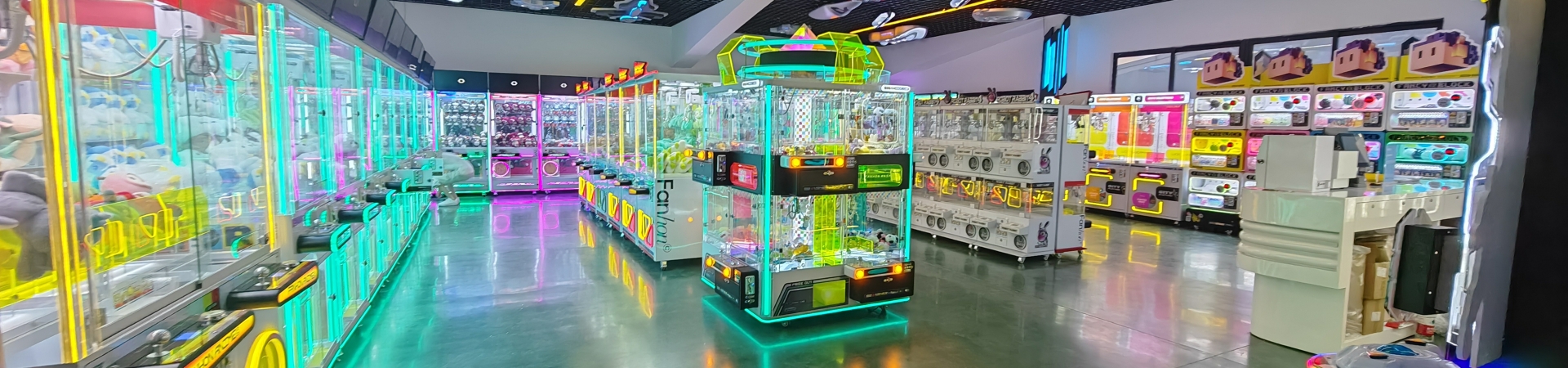
- Commercial Complexes: Upgrade from corner locations to theme experience zones, increasing the per unit area efficiency by more than 50%.
- Cultural Tourism/Scenic Spots: AR + local cultural IP, becoming a check-in point and secondary consumption entrance.
- Cinemas/Catering/Convenience Stores: Penetrate into fragmented scenarios to improve traffic monetization.
- Family/Parent-Child: Low-difficulty and safe design to expand the family customer group.
2. Format Upgrade: Trendy Toy Collection Stores
Claw machines + retail + social interaction + live streaming, creating a one-stop trendy toy space with per unit area efficiency far exceeding the traditional model.
V. Changes in Consumer Groups and Behaviors
- Core Group: Generation Z accounts for 64.3%, pursuing personalization, socialization and emotional value.
- Average Customer Price: The average one-time investment is 28.4 yuan, and the willingness to pay is improved.
- Social Attribute: 68.2% of users check in and share on social platforms, forming spontaneous communication.
- Demand Upgrade: From "being able to grab" to good experience, strong IP and social topics.
VI. Challenges and Compliance
- Tighter Supervision: Increased requirements for probability disclosure, minor protection and content compliance.
- Rising IP Costs: The increase in authorization fees forces refined product selection and operation.
- Homogeneous Competition: Traditional models lacking innovation are accelerating elimination, and the Matthew Effect is intensifying.
- Environmental Protection and Sustainability: Environmental protection materials, recyclable gifts and low-carbon operation have become trends.
VII. Key Opportunities in 2026
1. Intelligent Equipment Upgrade: Layout AI + cloud management + AR models to seize the high-end market.
2. In-depth IP Operation: Sign exclusive IP and create self-owned IP to build content barriers.
3. Omni-Channel Operation: Form a closed loop of online cloud grabbing + offline experience + private domain members.
4. Scenario Innovation: Differentiated layout in segmented scenarios such as cultural tourism, cinemas and trendy toy stores.
5. Refined Operation: Data-driven product selection, dynamic pricing and member system to improve single-store profitability.
2026 Claw Machine Market Trends: Intelligence, IP Integration and Ecological Profit
2026-Mar-27
Visits:7
Leave a message
Previous
No more!
No more!
Next